One View. Better Decisions: Connecting Billing, Inventory, Procurement
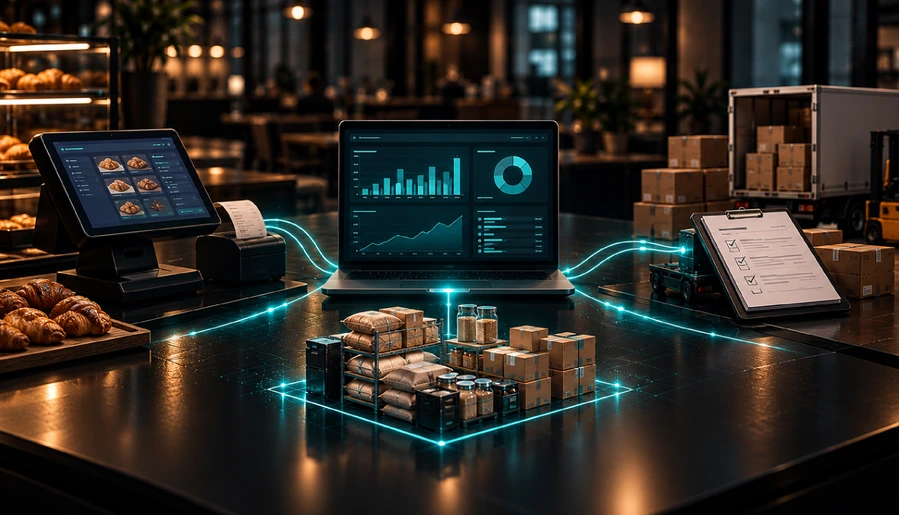
Business growth creates opportunities, at the same time introducing new complexities. Sales increase, ingredient requirements change, supplier networks expand, and inventory moves across locations at a faster pace.
Many growing businesses still manage operations through a mix of spreadsheets, accounting software, supplier calls, and standalone applications. Information exists across multiple systems, making it difficult to maintain a clear view of what is happening across the business.
Our conversations at India Bakery Expo 2026 highlighted how common this challenge remains among new bakery and restaurant operators. Businesses often rely on disconnected tools for billing, inventory tracking, and purchasing activities, creating gaps in visibility and slowing decision-making.
A connected approach powered by inventory procurement analytics helps businesses bring these functions together, creating a single source of operational visibility. Sales data, inventory levels, purchasing activities, and supplier performance can work together to support faster and more informed decisions.
Why Disconnected Systems Create Operational Challenges
Every business generates valuable operational data. Billing systems capture sales activity. Inventory records track stock movement. Procurement teams manage supplier relationships and purchasing requirements. Accounting platforms record financial transactions.
Problems emerge when these systems operate independently. Teams often spend time moving information manually from one system to another. Stock updates may not reflect recent sales. Purchase decisions may rely on assumptions rather than current consumption patterns. Managers may wait for reports before identifying issues that require immediate attention. Industry observations revealed that many businesses continue to depend on manual information transfers between systems, creating delays and reducing operational visibility.
Many businesses already have a billing system in place. Teams are familiar with their existing solutions and prefer them. But greater value comes from connecting inventory, procurement, and analytics with those existing systems. An integrated approach helps businesses gain deeper operational visibility, strengthen planning capabilities, and improve decision-making without disrupting day-to-day activities.
Connected operations create a clearer picture. Sales activity can immediately influence inventory planning. Inventory consumption can inform purchasing requirements. Procurement teams can gain visibility into future demand before placing orders.
Turning Sales Data into Actionable Insights
Every transaction contains useful information. A bakery that sells more celebration cakes during weekends requires different ingredients and packaging materials compared to weekdays. A restaurant experiencing increased footfall during local events may need higher stock levels for specific menu items.
Connected systems allow businesses to use sales information as an operational signal. Sales trends can help determine what needs to be purchased, how much inventory should be maintained, and when replenishment should occur.
Demand forecasting plays an important role in this process. Forecasting models can evaluate factors such as location, customer behavior, seasonal patterns, events, and regional demand trends. These insights help businesses plan inventory more effectively while supporting purchasing decisions with greater confidence.
Inventory Visibility at the Recipe Level
Food businesses operate differently from many other industries. A finished product often depends on multiple ingredients, each consumed in specific quantities. Managing inventory effectively requires visibility into raw materials, recipes, production requirements, and finished goods.
Recipe-based inventory planning creates a stronger operational foundation. Businesses can understand exactly how much stock is available, how much is required for production, and what ingredients need replenishment. Bill of materials information helps connect production planning with inventory management, creating greater accuracy across operations. Recipe-oriented inventory planning and detailed ingredient-level tracking emerged as key operational priorities for bakery and restaurant businesses.
Greater visibility supports better stock allocation, lower waste, and more accurate purchasing decisions.
Smarter Procurement Starts Earlier
Effective procurement begins long before a purchase order is created. Procurement teams need visibility into inventory levels, consumption trends, supplier performance, lead times, and future demand. Access to these insights supports a stronger procurement decision process across the organization.
Supplier evaluation also extends beyond pricing. Delivery reliability, fulfillment accuracy, consistency, and lead times all influence operational performance. Supplier performance insights can help businesses identify strengths, improve vendor selection, and reduce purchasing risks. Future capabilities such as multi-vendor price comparisons can further support strategic sourcing decisions.
Connected procurement creates opportunities for better planning, improved supplier management, and stronger control over operational costs.
Supporting Multi-Location Operations
Growth often brings additional outlets, production facilities, and distribution requirements. Many bakery businesses operate centralized kitchens that produce products for multiple locations. Managing production quantities and distribution requirements across outlets requires visibility into local demand patterns and store performance.
Businesses benefit when production planning aligns with outlet-level demand. High-footfall locations may require larger allocations, while other locations may need smaller quantities. Centralized visibility helps businesses distribute inventory more effectively and improve stock availability across locations. Centralized kitchen planning and outlet-specific allocation based on demand patterns attracted significant interest among operators at the expo.
Such visibility becomes increasingly valuable as organizations expand from a single outlet to a multi-location operation.
Bringing Analytics Into Everyday Decisions
Data becomes valuable when it supports action.
Leadership teams need visibility into operational performance without spending hours compiling reports from multiple systems. A unified dashboard can provide access to business information across billing, inventory, procurement, and operations. Analytics-driven visibility and centralized business information are key requirements for growing businesses.
Strong inventory management analytics capabilities help businesses understand stock movement, purchasing patterns, supplier performance, and demand fluctuations from a single view. Organizations increasingly seek more than historical reporting. Teams want insights that support operational planning, purchasing priorities, inventory optimization, and future growth.
Many businesses are moving toward a model where analytics becomes a core operational function. Concepts such as decision intelligence help connect data, business context, and operational actions, creating a stronger foundation for everyday decision-making.
A unified operational view allows businesses to identify patterns earlier, allocate resources more effectively, and respond with greater confidence.
Build Better Decisions With Connected Operations
Growth becomes easier to manage when information moves freely across the business.
Connected billing, inventory, procurement, and analytics functions provide greater visibility into operations, purchasing requirements, inventory levels, and business performance. Integrated systems help eliminate information silos while supporting faster and more informed decisions. Businesses at the India Bakery Expo 226 consistently highlighted disconnected systems as one of their biggest operational challenges, reinforcing the value of a connected approach.
Modern inventory procurement analytics creates the foundation for smarter planning, stronger supplier management, improved inventory control, and scalable growth.
Looking to connect billing, inventory, procurement, and analytics in one platform? Talk to RubiCube and discover how a unified operational view can help your business make faster, more confident decisions.